女装品牌应该在什么时候开始开发与采购秋冬针织产品?
简短回答:建议在目标交付期前约 6–9 个月启动秋冬针织的开发,并在交付前 4–5 个月锁定大货生产。对于大多数在 8 月至 10 月之间把秋冬货品发到门店或电商仓的品牌来说,这意味着 1–3 月启动纱线与廓形开发,4–5 月确认样衣,5–6 月下大货订单。如果走批发订货会节奏,或需要在展会上展示订货手册,整体时间线要再提前 4–6 周。
针织不是那种可以在最后一刻压缩工期的梭织品类。纱线有染色批次的交期,针距与组织开发需要试片,一件在平面图上看着对的毛衣,按正确张力织出来之后表现可能完全不同。启动晚的品牌最后往往要付空运费、接受替代纱线,或者从系列里砍掉款式。按时启动的品牌则能拿到更好的纱线供应、更多轮次的样衣,以及谈判空间。
本文拆解一个可落地的秋冬针织开发与采购日历、每个阶段必须做出的决策,以及如何与针织生产商或供应链伙伴配合,而不把现金压在你卖不掉的库存上。
秋冬针织开发日历:逐月拆解
以下时间线假设北半球秋冬季节,零售上架时间为 8 月底至 11 月。如果你的市场在南半球,或主要以预售、按单生产模式销售,请整体平移整个序列。
| 阶段 | 典型时间 | 需要确定的内容 |
|---|
| 系列与概念方向 | 交付前 9–10 个月 | 廓形、针距、价格结构、款式数量、色彩故事 |
| 纱线调研与寻源 | 交付前 8–9 个月 | 成分、纱支、手感、供应可得性、每公斤成本 |
| 首版样衣 / 初样 | 交付前 7–8 个月 | 版型、张力、组织开发、辅料与纽扣选择 |
| 版型与颜色确认 | 交付前 5–6 个月 | 最终尺寸、色样确认、纱线染色批次、订货样衣 |
| 大货下单 | 交付前 4–5 个月 | 数量、尺码配比、交期、付款条件 |
| 生产与质量节点 | 交付前 2–4 个月 | 中查、尺寸抽检、包装与标签 |
| 交付与补货 | 交付前 1–2 个月 | 运输方式、入仓、返单计划 |
为什么纱线阶段必须排在最前
针织采购中的大部分延误,起点是纱线而不是缝制。高端羊毛、羊绒或羊毛混纺纱可能需要按单纺纱或染色,而不同批次之间存在色差。如果你在 3 月用一块小样确认了颜色,就需要确认 6 月下大货时同一染色批次——或接近的匹配——仍然可得。提前启动纱线沟通,你才有空间测试替代方案,比较拉姆羊毛与美利奴、或羊绒混纺之间的差异,并理解纤维选择如何同时影响手感与到岸成本。
为什么样衣轮次不能压缩
针织开发在某种程度上比梭织更具迭代性。改针距会改垂感,改纱线会改版型,加绞花或挑孔组织会改用量、进而改成本。每一轮样衣都需要织造时间、后整时间和运输时间。一个新廓形做两到三轮是正常的。如果你只留一轮的空间,实际上等于在为一个没有充分验证的样衣签字确认。
联系针织供应商之前必须想清楚的决策
带着清晰输入来的买家,拿到的报价更快也更准。在接触针织工厂或采购伙伴之前,请先准备好以下内容。
- 款式数量与复杂度。一共多少款,其中基础款与重工、重组织款各占多少?12 针平纹圆领和手工收尾的绞花开衫,占用的生产时间完全不同。
- 目标零售价与目标 FOB。这决定了纱线的成本上限。请如实说明你所在的价格带,因为它直接决定哪些纤维与工厂可行。
- 纤维方向。是确定走羊毛与羊毛混纺,还是给棉、粘胶与混纺纱留出空间?高端定位通常意味着一个有考量的纤维叙事,而不是整个系列只用一种纤维。
- 尺码范围与版型意图。oversized、宽松与合身廓形需要不同的放码逻辑和不同的样衣尺码。
- 订单数量与返单预期。首单规模和可能的补货节奏,决定低起订量或小批量模式是否适合你。
- 交付窗口与运输方式。海运还是空运,会改变你可接受的最晚出厂日期。
如果你能提供工艺单、参考样衣,甚至只是带结构说明的清晰参考图,首版样衣落在你意图附近的概率会高得多。如果目前还没有工艺单,好的开发伙伴可以基于参考帮你把它建起来——这正是「有自主打版能力的伙伴」与「纯贸易中间商」之间的实际差别之一。
不同产品类型的交期差异
并非所有针织款式承担相同的开发负担。规划系列时,应按复杂度排序,让难做的款先启动。
复杂度较低的款式
平纹与罗纹组织、简单圆领、基础开衫、单色细针上衣通常推进最快。如果纱线有现货、版型接近已有基码,首版样衣可以较快完成,大货生产窗口也更短。
复杂度较高的款式
绞花与阿兰花、提花与嵌花、挑孔、手工收尾、套口收边以及多色图案,都会增加开发与生产时间。复杂组织还会提高纱线用量与不良率,两者都会影响成本。这类款式应该排在日历最前面,而不是留到最后。
混纺与特种纱线
羊毛羊绒混纺、起绒与缩绒纱线、粗针冬季纱线,供应链通常比常规纱线更长。如果某个款式依赖特定特种纱,请在把该款纳入系列规划之前确认供应可得性。
让品牌付出代价的常见时间错误
- 从样衣开始,而不是从纱线开始。用一款大货拿不到的纱线确认样衣,是针织采购中最昂贵的错误之一。
- 把复杂款留到最后。绞花开衫永远比预期更久,请把它排在最前。
- 以为一轮样衣就够。按两到三轮做预算,你基本不会被卡住。
- 忽略春节等生产日历影响。重大节假日前后工厂产能会收紧。如果你的大货窗口与假期重叠,请提前下单或绕开安排。
- 低估后整与包装。剪线、整烫、贴标、装袋都是真实的生产工序,不是事后补上的小事。
- 对未验证款式下单过深。首季本质是测试。小批量首单加上清晰的返单路径,能显著降低风险。
先小批量,再放量
对独立设计师品牌、买手店和较新的电商品牌来说,秋冬针织最大的风险不是单价,而是压了一批卖不掉的库存。分批推进比一次性大额采购更稳妥。
先用聚焦的若干款式做一个小批量首单,测试售罄率,再对跑得好的款补货。这要求供应商能支持低起订量与混批,而不是只按大货量报价;同时也要求首单所用纱线在返单时仍然可得——这正是开发阶段确认纱线如此重要的原因。
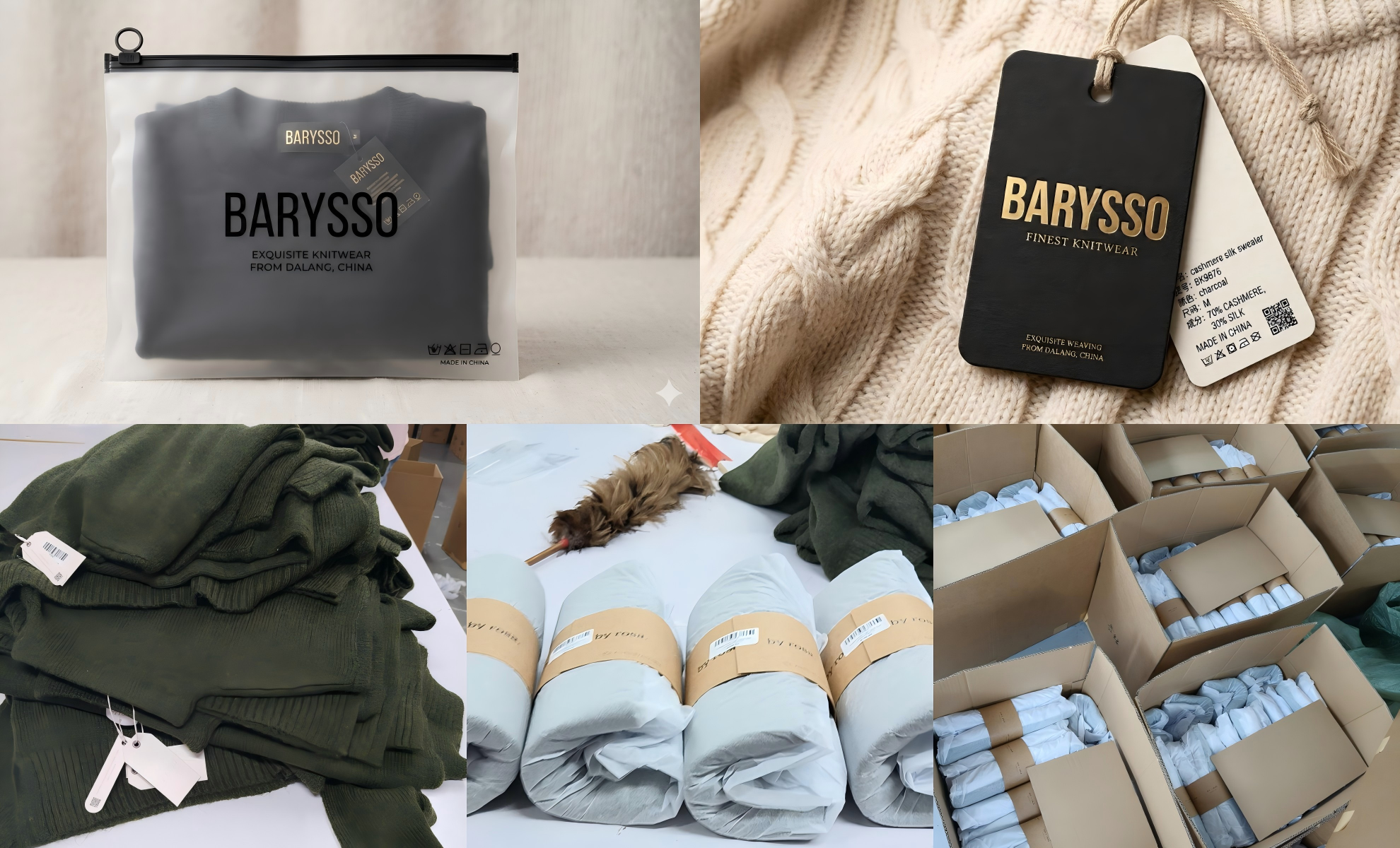
与一个把打版、纱线寻源和生产协同整合在一起的供应链伙伴合作,能让这种模式真正跑起来。BARYSSO 位于广东东莞大朗针织产业集群,正是按这一逻辑服务海外品牌:现货批发 50 件起、支持混批;改款开发 100 件起,依托自主打版能力与按款式匹配的合作工厂网络。这种结构适合希望搭建秋冬针织系列、又不想在首单上过度投入的品牌。
每个阶段需要与供应商确认的事项
清晰的检查点能减少意外。至少要把以下内容以书面形式确认下来。
- 开发阶段:纱线选项及其成分与成本、打样周期、包含几轮样衣、样衣费用由谁承担。
- 确认阶段:最终尺寸与公差、确认的颜色标准、辅料与标签规格、大货实际使用的纱线。
- 下单阶段:每色每码数量、出厂日期、付款节奏、生产过程中的验货或质量节点。
- 出货前阶段:尺寸抽检结果、包装方式、箱唛、运输单据。
在报价阶段,双语沟通与快速响应比多数买家预想的更重要。一个能在一天内回答针距或纱线替代这类技术问题的伙伴,整个季节下来的价值高于单价略低但回复缓慢含糊的供应商。
常见问题
秋冬针织开发应该在交付前多少个月启动?
从最初概念到交付,按 6–9 个月规划。做复杂绞花、提花或特种纱款式的品牌应往更长的一端靠;走批发或展会订货节奏的品牌,再额外预留 4–6 周。
如果用现货纱线,能否更快开发?
可以。如果纱线有现货、廓形接近已有基码,开发周期可以明显压缩。代价是你的颜色与纤维选择受限于现有库存,这可能不适合以特定纤维叙事为基础的高端系列。
首个秋冬针织系列的现实起订量是多少?
取决于供应商与款式。市场上存在小批量与低起订量模式,现货款通常从每款约 50 件起,开发款通常从每款约 100 件起。请确认混色混码是否计入起订量。
应该在纱线确认之前先确认样衣吗?
不应该。先确认纱线,至少确认样衣所用纱线在大货阶段可得。用不可得纱线做出的样衣会造成「假确认」,最终被迫临时替换。
卖得好的款式如何安排返单?
把返单可能性写进初始计划:确认纱线持续可得、留存确认样与尺寸记录,并在季前就补货交期与供应商达成一致。
与采购伙伴合作而不是单一工厂,会不会更慢?
不一定。能把打版、纱线寻源与工厂匹配协同起来的伙伴,在开发上反而可能更快,因为每个款式都被分配到匹配的生产资源。关键在于明确每一步由谁负责、进度如何汇报。
下一步
如果你正在规划秋冬针织系列,并且已有款式、参考或工艺单,最有用的下一步是进行一次开发沟通,而不是直接询价。把你的纤维方向、款式数量、目标价格带和交付窗口告诉我们,并索取一份带真实日期的打样计划。BARYSSO 服务海外品牌、买手店、批发商与电商卖家,覆盖高端针织与全品类女装的开发,从首版样衣到大货交付全程协同。
When Should Fashion Brands Start Developing and Sourcing Autumn/Winter Knitwear?
Short answer: start developing autumn/winter knitwear roughly 6–9 months before your target delivery window, and lock production 4–5 months out. For most brands shipping A/W stock to stores or e-commerce warehouses between August and October, that means beginning yarn and silhouette development in January–March, confirming samples by April–May, and placing bulk orders by May–June. If you sell through a wholesale calendar or need to present a line sheet at a trade show, shift the whole timeline 4–6 weeks earlier.
Knitwear is not a cut-and-sew category where you can compress the schedule at the last minute. Yarn has dye-lot lead times, gauge and stitch development needs trial swatches, and a sweater that looks right on a flat sketch can behave very differently once it is knitted at the correct tension. Brands that start late end up paying air freight, accepting substitute yarns, or cutting styles from the range. Brands that start on time get better yarn availability, more sample rounds, and room to negotiate.
This guide breaks down a realistic development and sourcing calendar for autumn/winter knitwear, the decisions that must be made at each stage, and how to work with a knitwear manufacturer or supply chain partner without locking up cash in inventory you cannot sell.
The A/W Knitwear Development Calendar, Month by Month
The timeline below assumes a Northern Hemisphere autumn/winter season with retail floor dates from late August to November. Adjust by moving the entire sequence if your market is Southern Hemisphere or if you sell primarily through pre-order and made-to-order models.
| Stage | Typical Timing | What Gets Decided |
|---|
| Range and concept direction | 9–10 months before delivery | Silhouettes, gauge, price architecture, number of styles, colour story |
| Yarn research and sourcing | 8–9 months before | Fibre content, yarn count, hand-feel, supplier availability, cost per kg |
| First samples / proto | 7–8 months before | Fit, tension, stitch development, trim and button choices |
| Fit and colour approvals | 5–6 months before | Final measurements, lab dips, yarn dye lots, salesman samples |
| Bulk order placement | 4–5 months before | Quantities, size ratios, delivery schedule, payment terms |
| Production and quality checks | 2–4 months before | Inline checks, measurement audits, packing and labelling |
| Delivery and replenishment | 1–2 months before | Shipping mode, warehouse receipt, reorder planning |
Why the yarn stage comes first
Most delays in knitwear sourcing begin with yarn, not with sewing. A premium wool, cashmere, or wool-blend yarn may need to be spun or dyed to order, and dye lots vary between batches. If you approve a colour on a small swatch in March, you need to confirm that the same dye lot — or a close match — is still available when you place bulk in June. Starting yarn conversations early gives you room to test alternatives, compare a lambswool against a merino or a cashmere blend, and understand how fibre choice affects both hand-feel and landed cost.
Why sample rounds cannot be rushed
Knitwear development is iterative in a way that woven garments often are not. Changing the gauge changes the drape; changing the yarn changes the fit; adding a cable or pointelle pattern changes the consumption and therefore the cost. Each sample round needs knitting time, finishing time, and shipping time. Two to three rounds is normal for a new silhouette. If you only leave room for one, you are effectively approving a sample you have not fully tested.
Key Decisions to Make Before You Contact a Knitwear Supplier
Buyers who arrive with clear inputs get faster, more accurate quotes. Before you approach a knitwear factory or sourcing partner, prepare the following.
- Style count and complexity. How many styles, and how many are basic versus heavily patterned or constructed? A 12-gauge plain crew neck and a hand-finished cable cardigan consume very different production time.
- Target retail price and target FOB. This determines the yarn ceiling. Be honest about the band you are working in, because it directly shapes which fibres and factories are viable.
- Fibre direction. Are you committing to wool and wool blends, or leaving room for cotton, viscose, and blended yarns? Premium positioning usually means a considered fibre story, not a single fibre across the whole range.
- Size range and fit intent. Oversized, relaxed, and fitted silhouettes require different grading and different sample sizes.
- Order quantities and reorder expectations. Your first order size and your likely replenishment pattern determine whether a low-MOQ or small-batch approach makes sense.
- Delivery window and shipping mode. Sea freight versus air changes your latest acceptable ex-factory date.
If you can supply a tech pack, reference samples, or even clear inspiration images with construction notes, the first sample is far more likely to land close to your intent. Where a tech pack does not yet exist, a good development partner can help build one from references — this is one of the practical differences between working with a pure trading intermediary and working with a partner that has in-house pattern-making capability.
How Lead Times Differ by Product Type
Not all knitwear styles carry the same development burden. Planning a range means sequencing styles by complexity so that the difficult pieces start first.
Lower-complexity styles
Plain jersey and rib stitches, simple crew necks, basic cardigans, and single-colour fine-gauge tops generally move fastest. If the yarn is available in stock and the fit is close to an existing block, a first sample can be turned around quickly and the bulk production window is shorter.
Higher-complexity styles
Cable and aran patterns, jacquard and intarsia work, pointelle, hand-finishing, linked trims, and multi-colour patterns all add development and production time. Complex stitch structures also increase yarn consumption and reject rates, both of which affect cost. These styles should be started earliest in the calendar, not left until the end.
Blended and specialty yarns
Wool-cashmere blends, brushed and felted yarns, and heavy-gauge winter yarns often have longer supply chains than standard yarns. If a style depends on a specific specialty yarn, confirm availability before you commit the style to the range plan.
Common Timing Mistakes That Cost Brands Money
- Starting with the sample, not the yarn. Approving a sample made from a yarn that will not be available in bulk is one of the most expensive mistakes in knitwear sourcing.
- Leaving the complex styles until last. The cable cardigan always takes longer than expected. Sequence it first.
- Assuming one sample round is enough. Budget for two to three rounds and you will rarely be caught out.
- Ignoring Chinese New Year and other production calendar effects. Factory capacity tightens around major holidays. If your bulk window overlaps with a holiday period, place orders earlier or plan around it.
- Underestimating finishing and packing. Trimming, pressing, labelling, and polybagging are real production steps, not afterthoughts.
- Ordering too deep on unproven styles. A first season is a test. Small initial orders with a clear reorder path reduce risk substantially.
Planning Small-Batch First, Then Scaling
For independent designer brands, boutiques, and newer e-commerce labels, the biggest risk in autumn/winter knitwear is not the price per unit — it is committing to inventory that does not sell. A staggered approach works better than a single large buy.
Start with a small initial run across a focused set of styles, test sell-through, and then replenish the winners. This requires a supplier who can support low minimums and mixed orders rather than one who only quotes on large volumes. It also requires that the yarn used in the first run remains available for the reorder, which is why yarn confirmation at the development stage matters so much.
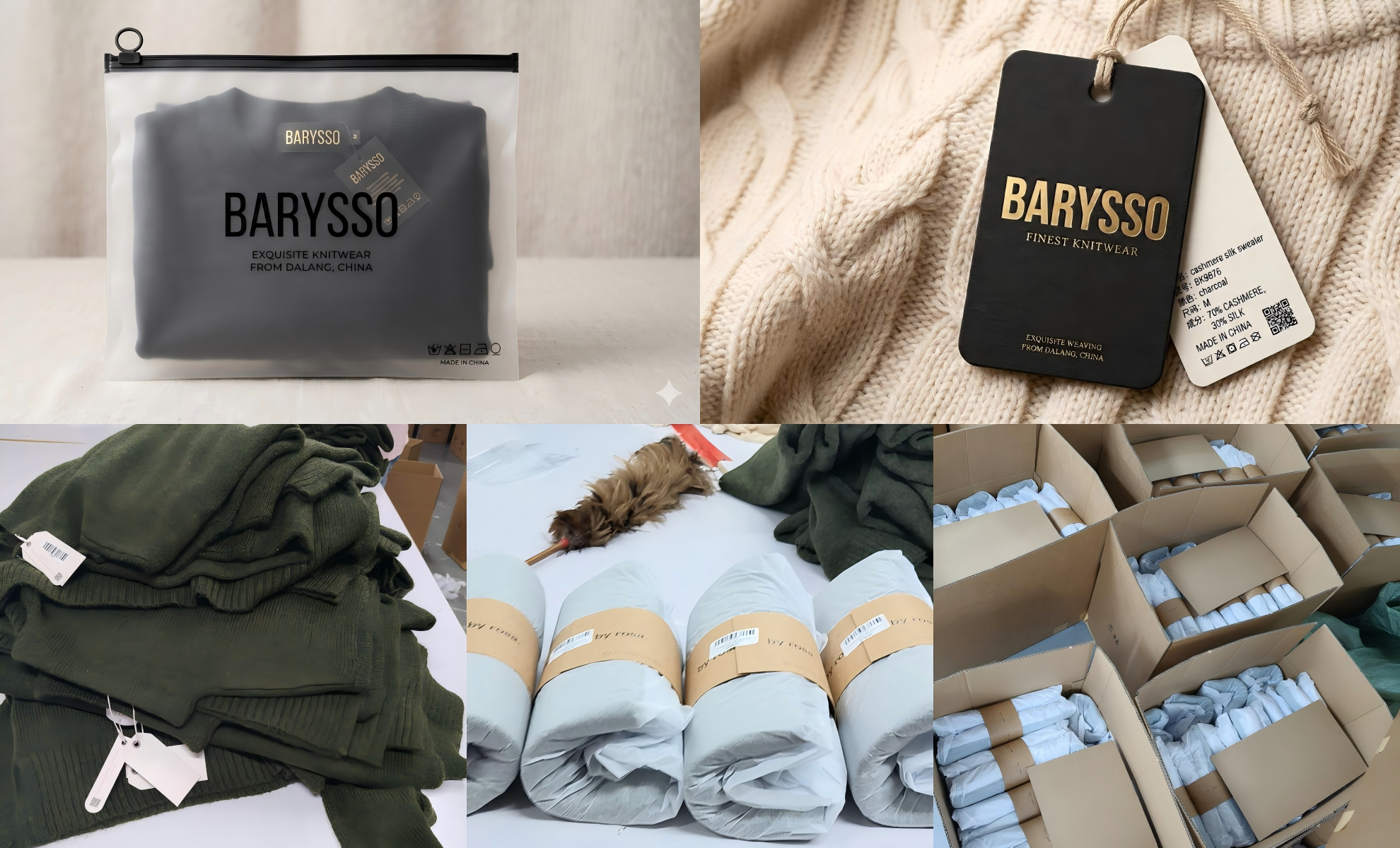
Working with a supply chain partner that integrates pattern-making, yarn sourcing, and production coordination makes this model practical. BARYSSO, based in the knitwear cluster around Dalang in Dongguan, Guangdong, works with overseas brands on exactly this basis: stock wholesale from 50 pieces with mixed batches, and development orders from 100 pieces per style, supported by in-house pattern-making and a network of partner factories matched to each style. That structure suits brands that want to build an autumn/winter knitwear range without over-committing on the first order.
What to Confirm With Your Supplier at Each Stage
Clear checkpoints reduce surprises. At minimum, confirm the following in writing.
- Development stage: yarn options with fibre content and cost, sample lead time, number of sample rounds included, and who bears sample cost.
- Approval stage: final measurements and tolerances, approved colour standards, trim and label specifications, and the exact yarn to be used in bulk.
- Order stage: quantity per colour and size, ex-factory date, payment schedule, and the inspection or quality-check points during production.
- Pre-shipment stage: measurement audit results, packing method, carton markings, and shipping documentation.
Bilingual communication and fast response matter more than most buyers expect at the quotation stage. A partner who can answer a technical question about gauge or yarn substitution within a day is worth more over a season than a marginally lower unit price with slow, unclear replies.
Frequently Asked Questions
How many months before delivery should I start autumn/winter knitwear development?
Plan for six to nine months from first concept to delivery. Brands with complex cable, jacquard, or specialty-yarn styles should work toward the longer end, and brands selling through wholesale or trade-show calendars should add another four to six weeks.
Can I develop knitwear faster if I use stock yarn?
Yes. If the yarn is available in stock and the silhouette is close to an existing block, development can compress meaningfully. The trade-off is that your colour and fibre options are limited to what is available, which may not suit a premium range built on a specific fibre story.
What is a realistic minimum order for a first autumn/winter knitwear range?
It depends on the supplier and the style. Small-batch and low-MOQ models exist, typically starting from around 50 pieces per style for stock items and around 100 pieces per style for developed styles. Confirm whether mixed colours and sizes count toward the minimum.
Should I approve a sample before the yarn is confirmed?
No. Approve the yarn first, or at least confirm that the sample yarn will be available in bulk. A sample made from an unavailable yarn creates a false approval and forces a late substitution.
How do I handle reorders for a style that sold well?
Build reorder potential into the original plan: confirm the yarn's continued availability, keep the approved sample and measurements on file, and agree a replenishment lead time with your supplier before the season starts.
Does working with a sourcing partner rather than a single factory slow things down?
Not necessarily. A partner that coordinates pattern-making, yarn sourcing, and factory matching can move faster on development because each style is routed to appropriate production resources. The key is clarity on who owns each step and how progress is reported.
Next Step
If you are planning an autumn/winter knitwear range and have styles, references, or a tech pack ready, the most useful next step is a development conversation rather than a price request. Share your fibre direction, style count, target price band, and delivery window, and ask for a sample plan with realistic dates. BARYSSO works with overseas brands, boutiques, wholesalers, and e-commerce sellers on premium knitwear and full-category womenswear development, from first sample through bulk delivery.